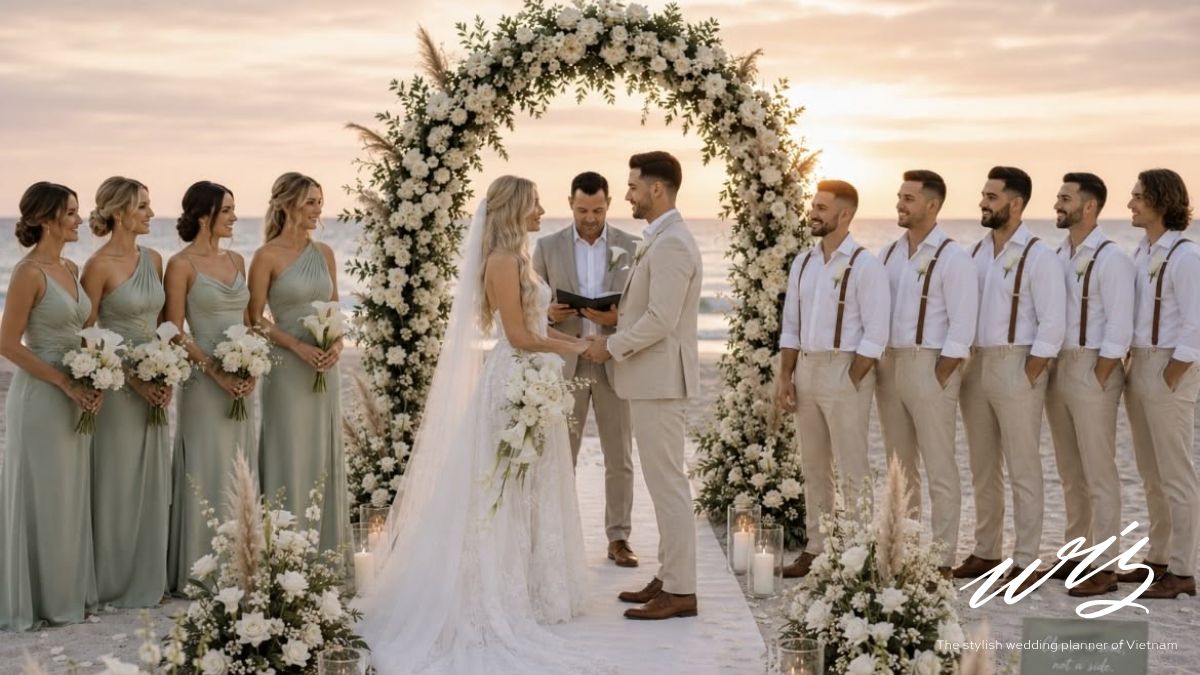
A destination wedding sounds romantic in theory. In practice, it involves two people coordinating an event across time zones, currencies, and legal systems – often in a country they’ve visited once or never. This guide gives you an honest, step-by-step picture of what’s actually involved, so you can plan with clarity and confidence.
What is a destination wedding?
A destination wedding is any wedding held away from where the couple lives – typically somewhere meaningful, scenic, or simply somewhere they’ve always dreamed of visiting. It might be a coastal villa in southern Europe, a mountain lodge in New Zealand, a historic estate in the UK, or a jungle retreat in Southeast Asia. The location is as much a part of the experience as the ceremony itself.
Couples choose destination weddings for different reasons. Some want the intimacy that comes naturally when only close family and friends can make the journey. Others are drawn to a setting that a local venue simply can’t offer. Many find that a destination wedding costs less than a comparable event at home – depending on where you choose, the savings can be substantial.
The trade-off is real: a destination wedding demands more advance planning, more trust in people you may never meet in person before the day, and an acceptance that some guests won’t be able to attend. If those terms feel right for what you want, a destination wedding is often one of the most memorable ways to get married.
How far in advance should you start planning?
Earlier than you think. For most destination weddings, 12 to 18 months of lead time is the realistic minimum – not a luxury.
- The best venues in popular destinations book up a year or more in advance, particularly during peak season.
- International guests need time to arrange flights, accommodation, annual leave, and in some cases travel visas.
- Legal marriage requirements vary by country and can involve paperwork that takes weeks or months to process.
- Building a trusted team of local wedding specialists – photographer, florist, hair and makeup artist, officiant – takes time when you’re doing it remotely.
If your timeline is shorter – say, six to nine months – it’s still achievable with a good local planner driving the process. But you’ll have fewer options and less room to be selective.
How to choose the right destination
The destination sets the tone for everything else: the aesthetic, the guest experience, the legal process, and the cost. Before you fall for a place, it’s worth working through a few practical questions.
Climate and season
Every destination has a season that’s right for weddings – and a season that isn’t. Research this carefully before committing to a venue. A location that looks extraordinary in the dry season can be entirely different in monsoon or hurricane season. Check the average weather by month, not just the annual overview, and build your date choice around the best window.
Accessibility for your guests
How easy is it for your guests to get there? Are there direct international flights, or does the journey involve connections? Is accommodation available at a range of price points, or will guests be stretching their budget to attend? The more friction there is in getting there, the smaller your guest count will likely be – which may be exactly what you want, or may not be.
Legal requirements
This is where couples are most commonly caught off guard. Every country has its own rules about who can marry there, what documents are required, and how far in advance the paperwork needs to be filed. Some countries require a residency period before the ceremony. Others require documents to be officially translated and authenticated before they’re accepted.
Many couples sidestep the complexity by marrying legally at home – a quiet registry appointment a few days before they travel – and holding a symbolic ceremony at their destination. The ceremony carries the same emotional significance; only the legal paperwork happens elsewhere. A good local wedding planner will walk you through whichever path makes most sense for your chosen destination.
Budget and cost structure
Destination wedding costs vary enormously by location. Some destinations are genuinely more affordable than a comparable event at home; others are not. All-inclusive resort packages simplify the budgeting process – one contract, predictable costs – but typically offer less creative control. Building your own team of individual specialists gives you more freedom but requires more coordination. Factor in not just the ceremony and reception, but travel, accommodation, legal costs, and the guest experience you want to create around the wedding day itself.
Why a local wedding planner is non-negotiable
If there is one thing that distinguishes destination weddings that go beautifully from those that don’t, it’s the planner. Not a remote coordinator who subcontracts locally. A genuine, on-the-ground professional with deep knowledge of your specific destination and established relationships with the best local suppliers.
Here is what a strong local planner actually does:
They know the local wedding industry – who is consistently excellent, who to avoid, and who to call when something needs fixing quickly.
They manage the entire timeline and logistics on the day, so you’re never fielding a question from a florist or chasing a photographer. You just get married.
They navigate the legal and administrative requirements of their country, so you’re not trying to decode foreign bureaucracy from across the world.
They anticipate problems before they become problems – which is only possible when you know a destination and its suppliers as well as they know you.
In destinations where language is a barrier, they communicate with local suppliers fluently, which directly affects the quality of every interaction and outcome on the day.
When you’re evaluating planners, look for a portfolio that features international couples specifically. Read testimonials from people who planned their wedding from abroad – their experience will be closest to yours. Arrange a video call before committing to anyone; you’ll be in close communication for the better part of a year, and the relationship needs to feel right.
How to assemble your wedding-day team from abroad
Your photographer, videographer, florist, hair and makeup artist, and officiant are the people who will shape the lived experience of your day. Putting this team together remotely requires more due diligence than it would for a local wedding – and more trust in the recommendations of your planner.
Photographer and videographer
Your photographer is the professional you’ll spend the most time with on your wedding day, and their work will be how you revisit it for the rest of your lives. For a destination wedding, experience in your specific location matters far more than it would at home. A photographer who knows the venue, the light at different times of day, and how to work in those conditions will produce meaningfully better results than someone figuring it out for the first time.
When reviewing photographers, look at full wedding galleries rather than curated highlights. You want to see how they handle the variety of a complete day – preparation, ceremony, portraits, reception. A video call before booking tells you as much about fit as the portfolio itself.
Florist, hair and makeup artist, and officiant
For florals and hair and makeup, a local specialist with destination wedding experience is almost always the better choice. They understand the climate, the venue conditions, and which choices hold up through a full day in local weather. Provide a detailed brief with reference images well in advance, and request a trial or consultation before the day if at all possible.
Your officiant sets the emotional tone of the ceremony itself. If you’re holding a symbolic ceremony – which many destination couples do – you have more flexibility here. Look for someone who specialises in personal, non-scripted ceremonies, and brief them properly on your story. Your planner will have people they trust and have worked with before.
How to manage your guest list and invitations
A destination wedding changes the guest list dynamic in a way that most couples find unexpectedly freeing. The journey naturally filters the list to the people who genuinely want to be there. Most destination wedding guest counts fall between 20 and 60 – intimate enough that every conversation matters, large enough to feel like a real celebration.
Getting the timing right
- Save-the-dates: send at least 12 months before the wedding. International guests need this lead time to book flights before prices rise, arrange annual leave, and plan around other commitments.
- Formal invitations: six to eight months out, with all the practical information guests need – dates, nearest airports, accommodation options, visa requirements for their nationality, and a clear RSVP deadline.
- Wedding website: set this up early and keep it updated. It becomes the central hub for everything: travel logistics, accommodation recommendations, the weekend itinerary, and answers to the questions you’ll otherwise field individually from every guest.
Making the journey easier for your guests
Negotiate a room block at a hotel close to the venue – group rates are a genuine kindness, and keeping guests in the same place builds its own community.
Arrange transfers from the nearest airport or station if the venue isn’t easily accessible by local transport.
Put together a short travel guide covering recommended flights, visa information, local currency, and a handful of things to do for guests arriving early.
Consider a welcome dinner the evening before the wedding – it gives travel-weary guests a chance to arrive, settle in, and meet each other before the main event. The atmosphere that evening is almost always unexpectedly joyful.
Your destination wedding planning checklist – at a glance
Here’s the full process in seven steps. Use this as a working reference as your planning progresses.
01 | Define your vision & guest count | Intimate micro-wedding or full celebration? This shapes every decision after it. |
02 | Set your budget | Map every cost category early and build in a 10–15% contingency. |
03 | Choose your destination | Match climate, accessibility, legal requirements, and atmosphere to your vision. |
04 | Hire a local wedding planner | The most important investment you’ll make – do this before booking anything else. |
05 | Secure your venue & date | Book 12–18 months out. The best venues go fast, especially in peak season. |
06 | Assemble your wedding-day team | Photographer, florist, hair & makeup artist, officiant – each booked well in advance. |
07 | Send save-the-dates & manage guests | At least 12 months before – international guests need more lead time than you think. |
Every destination wedding is different. But these seven steps apply whether you’re planning a ceremony for 15 people on a clifftop in Portugal or a celebration for 60 in the mountains of Japan. The structure is the same; the details are yours.
Why couples are choosing Vietnam for their destination wedding
If you’re still deciding on a destination, Southeast Asia – and Vietnam in particular – has become one of the most sought-after choices for international couples from the US, UK, Australia, and Singapore.
The reasons are straightforward: Vietnam offers dramatic, genuinely cinematic landscapes that are unlike anything available in Western markets – limestone karst mountains, lantern-lit ancient towns, pristine beaches, and jungle-covered highlands. The local hospitality culture is extraordinarily warm. And the cost of a well-produced wedding in Vietnam runs 40 to 60 percent lower than an equivalent event at home, without any compromise on quality or attention to detail.
Popular locations include Ninh Binh for its otherworldly karst scenery and sense of total seclusion, Hoi An for its atmospheric old town and beach access, Phu Quoc for luxury beachfront settings, and Ha Long Bay for the extraordinary possibility of a ceremony aboard a traditional wooden junk on emerald water. Da Lat and Sapa in the highlands offer a cooler, mist-covered alternative for couples who want something more intimate and unusual.
Wed In Style has planned destination weddings across Vietnam for international couples from the US, UK, Australia, Singapore, and beyond. If you’re considering Vietnam for your wedding, we’d love to help you think it through – from the first conversation to the day itself.
Start planning your destination wedding in Vietnam
Get in touch with our team at wedinstyle.vn – no commitment, just a conversation.
Frequently asked questions (FAQs)
It depends significantly on where you’re getting married, how many guests you’re inviting, and the level of service you want. As a rough guide, a well-produced intimate destination wedding for 15 to 25 guests can start from $8,000 to $15,000 USD. A fuller celebration for 40 to 80 guests at a premium venue with a professional planning team typically ranges from $20,000 to $60,000 USD. Some destinations are substantially cheaper than others – Southeast Asia, for example, tends to cost 40 to 60 percent less than equivalent events in Europe or Australia.
There’s no right number, but most destination wedding couples end up with between 20 and 60 guests. The journey acts as a natural filter – those who attend are genuinely the people who want to be there. Many couples find this the most unexpectedly positive aspect of a destination wedding: the guest list becomes intentional rather than obligatory, and the day feels more personal as a result.
For a destination wedding, yes – a local planner is as close to essential as it gets. You’re coordinating an event in a country where you may not speak the language, don’t know the suppliers, and can’t easily visit in person during the planning process. A good local planner manages all of that. The cost of hiring one is almost always recovered through their supplier relationships and the stress they prevent across the entire planning period.
In most countries, yes – but the process and documentation required vary significantly from country to country, and sometimes from region to region within the same country. Many international couples choose to marry legally at home first and hold a symbolic ceremony at their destination, which removes the legal complexity from the day itself. Your local planner will be able to advise on the specific requirements for whichever country you’re considering.
Something almost always needs managing at any wedding – supplier running late, weather changing, a detail that needs adjusting. What makes a destination wedding different is that you’re entirely reliant on your planner to handle it, because you don’t have the local knowledge or contacts to do it yourself. This is exactly why the quality of your planner matters so much. Ask any planner you’re considering how they’ve handled unexpected situations in the past. Their answer will tell you a great deal.