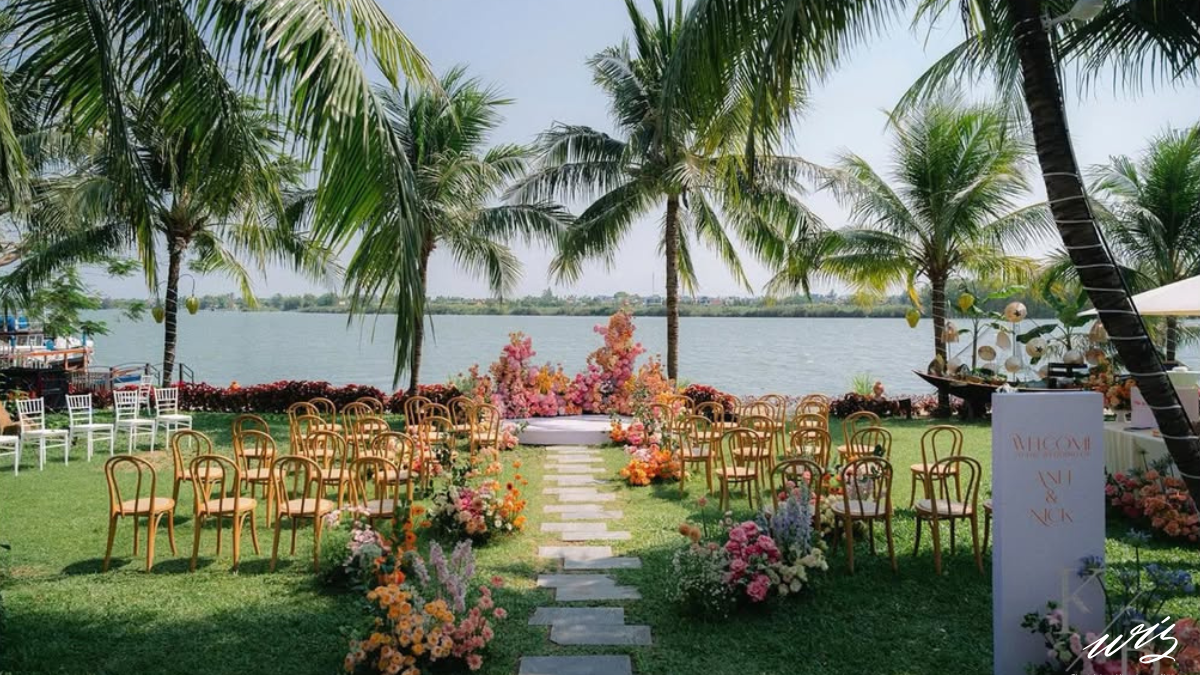
Choosing where to marry is the first real decision of your wedding, and in Vietnam it is also the most enjoyable one. The country stretches more than 1,600 kilometres, from misty northern mountains to tropical islands in the south, so almost any celebration you can picture already has a landscape waiting for it. Below we walk you through our favourite wedding venues in Vietnam, region by region, then cover timing, budget and what planning from abroad actually looks like.
Why couples are choosing Vietnam for their wedding?
The first reason is value. A beautifully styled wedding here usually costs a fraction of an equivalent celebration in Europe, Australia or the United States, and that difference goes straight back into design, food and guest experience.
The second is scenery. Very few countries let you choose between mountains, bays, rice fields, ancient towns and islands within a single trip. Because Vietnam is long and narrow, there is always a region with beautiful weather, whatever month you have in mind.
The third is infrastructure. International resort groups now operate across Phu Quoc, Da Nang, Nha Trang and Ha Long, alongside boutique properties and heritage venues, so we can host anything from a twelve person elopement to a three hundred guest celebration.
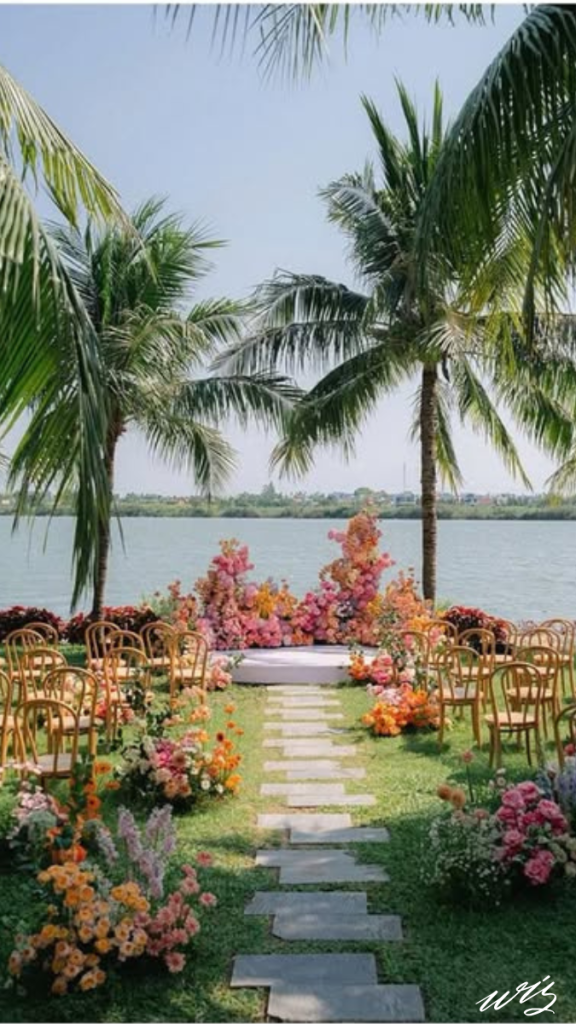
Best wedding venues in Northern Vietnam
The north is dramatic and seasonal. We recommend it to couples who want atmosphere more than guaranteed sunshine.
Sa Pa for a misty mountain wedding
Sa Pa sits high in the Hoang Lien Son range, where rice terraces fall away into valleys and cloud drifts through your ceremony in real time. Boutique mountain lodges suit intimate ceremonies and elopements of ten to forty guests, and evenings stay cool year round. We love September and October for golden harvest terraces, or March to May for clearer skies.
Halong Bay for a wedding on the water
Ha Long is one of the most photographed seascapes on earth, and you can marry inside it: on the deck of a private cruise boat, on a resort lawn framed by limestone islands, or on a beach reachable only by tender. Boat weddings suit smaller groups and need careful weather planning, but no venue on land can manufacture that backdrop.
Mai Chau and Hoa Binh for a countryside wedding
A few hours from Hanoi, Mai Chau and Hoa Binh give you green valleys, stilt house villages and lakeside eco resorts. This is the relaxed option: long welcome dinners, a barefoot ceremony on grass, guests cycling between rice paddies in the afternoon.
Ninh Binh for a limestone valley wedding
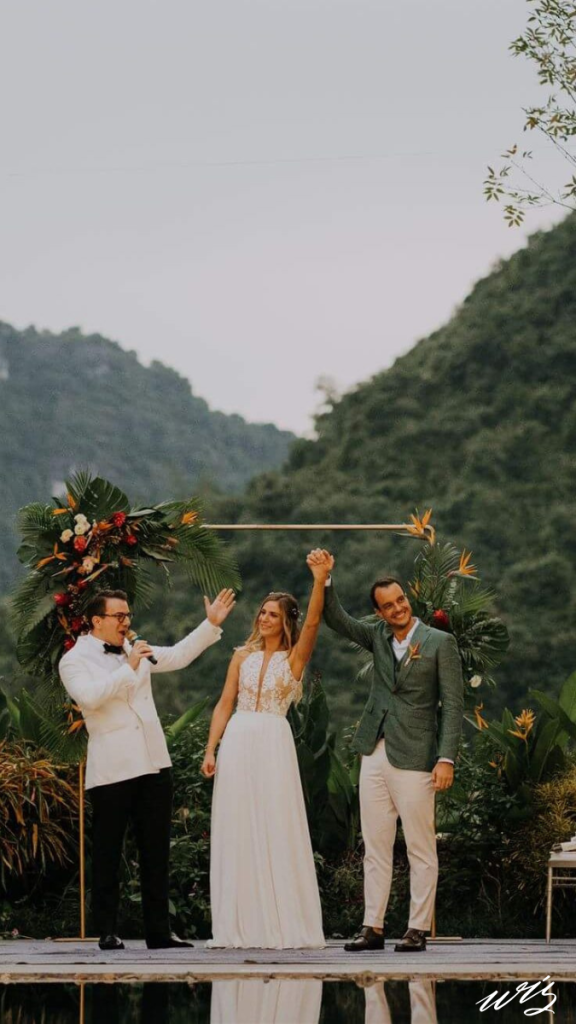
Often called Ha Long Bay on land, Ninh Binh combines towering karsts, river caves and ancient temples around two hours from Hanoi airport. That mix of drama and easy access has made Ninh Binh one of the most requested destinations among the couples we work with. Valley resorts handle both elopements and full weekends of events, and a sampan ride makes an unforgettable ceremony entrance.
Best wedding venues in Central Vietnam
Central Vietnam is where beaches, heritage and highland gardens sit within a few hours of one another. We suggest it when a couple cannot decide between sand and culture.
Hue for an imperial and historic wedding
Hue was the seat of the Nguyen dynasty, and its garden houses, riverside estates and heritage properties suit couples drawn to ceremony and tradition. It is our first choice for a Vietnamese tea ceremony staged with real historical weight, or a bilingual celebration that honours family customs.
Da Nang and Hoi An for a beach and ancient town wedding
This pairing is the most versatile wedding region in the country. Da Nang brings an international airport, five star beach resorts and generous ballroom capacity, while Hoi An, thirty minutes south, brings lantern lit streets, riverside courtyards and rice field villas. Many of our couples split the weekend, with a welcome party in the old town and the ceremony on the beach. It suits guest lists of 50 to 300.
Quy Nhon for a quiet seaside wedding
Quy Nhon offers the coastline of Nha Trang without the crowds: long empty beaches, rocky coves and a handful of design led resorts. Choose it if you want guests to feel they have discovered somewhere, and if a private, unhurried celebration matters more than nightlife.
Da Lat for a hillside garden wedding
Da Lat sits in the highlands at around 1,500 metres, with pine forest, flower farms, lakes and colonial era villas. The cool climate keeps long outdoor ceremonies comfortable, which matters if your guests are nervous about tropical heat. Garden estates and lakeside venues here suit weddings from 30 to 200 guests.
Nha Trang for a tropical beach wedding
Nha Trang is the classic Vietnamese beach wedding: a wide bay, offshore island resorts and a mature hospitality scene with strong catering and entertainment. Island properties work especially well for two day celebrations where everyone stays on site.
Phan Thiet for a coastal dune wedding
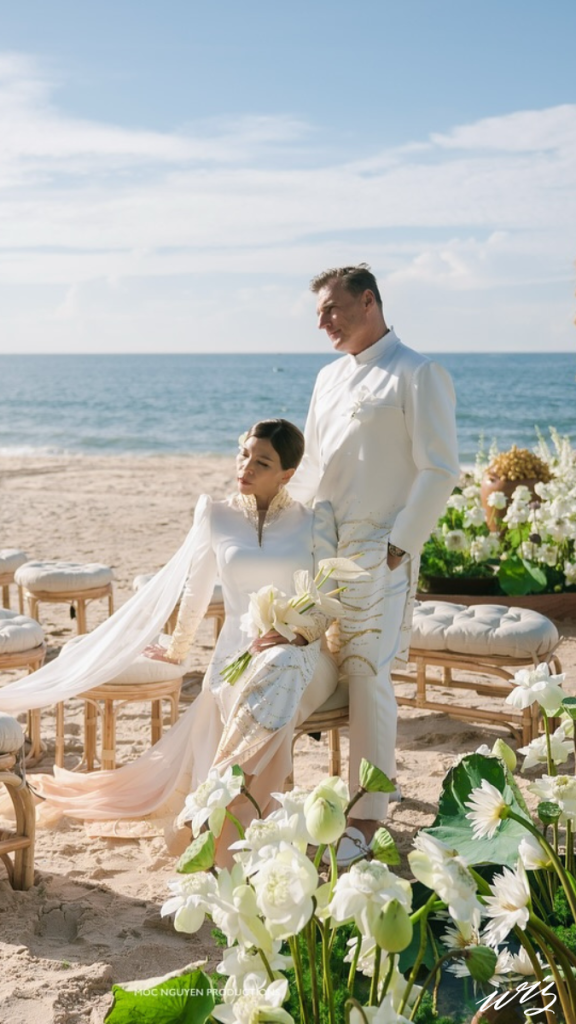
Phan Thiet and neighbouring Mui Ne pair a long resort coastline with red and white sand dunes just inland, a landscape that photographs like nowhere else in Vietnam. It is drivable from Ho Chi Minh City, which makes it practical when most of your guest list is local. Expect reliable sun and a steady sea breeze, so ceremony layout and florals need thought.
Best wedding venues in Southern Vietnam
Can Tho for a riverside Mekong wedding
Can Tho is the heart of the Mekong Delta, with fruit orchards, floating markets and colonial era riverside properties. A wedding here leans into slow river life: a boat procession at sunrise, a garden ceremony under mango trees, southern Vietnamese cuisine served family style.
Phu Quoc Island for a luxury beach wedding
Phu Quoc is our flagship destination wedding island, with international standard resorts, sunset facing west coast beaches and direct flights from several Asian hubs. Many nationalities also enjoy visa exemption when arriving directly. Welcome party, ceremony and after party all happen within walking distance, the easiest logistics in the country for a multi day celebration.
City wedding venues in Hanoi and Ho Chi Minh City
Not every couple wants sand or mountains. Hanoi and Ho Chi Minh City both offer five star ballrooms, rooftop terraces, restored French colonial buildings and industrial loft spaces. These are the practical choice when most guests are local, when family expects a large banquet, or when you want the tea ceremony and reception in one city.
Cities also solve the weather question, because an indoor venue removes the biggest variable in Vietnamese wedding planning. Plenty of our couples do both: a family celebration in the city, then a smaller destination ceremony afterwards.
How much does a wedding in Vietnam cost?
Costs vary widely, but a few patterns help with early budgeting. Elopements and micro weddings for two to twenty guests are the most affordable route, and often the most design forward, because the whole budget goes into styling, photography and one beautiful dinner.
Mid size destination weddings of 50 to 150 guests sit well below equivalent Western pricing, with catering and venue hire as the largest lines. Costs rise with distance from a major airport, imported florals, live entertainment and anything that requires supplier travel.
We ask couples to hold back roughly 10 percent as contingency, mostly for weather backup plans. Remember too that a welcome dinner and farewell brunch change the shape of the budget entirely.
Best time of year to hold your wedding in Vietnam
Vietnam has no single wedding season, so timing depends entirely on the region you choose.
Northern Vietnam (Sa Pa, Ha Long, Ninh Binh, Hanoi) is best from October to April. Autumn brings dry, mild weather and harvest colour, while summer is hot, humid and carries storm risk from June to August.
Central Vietnam (Hue, Da Nang, Hoi An, Nha Trang, Quy Nhon) is best from February to August, with reliable sunshine and calm seas. We steer couples away from October and November, the peak of the rainy and typhoon season.
Southern Vietnam (Phu Quoc, Can Tho, Ho Chi Minh City) has two seasons. Dry runs from November to April and is the prime window; the wet season from May to October brings short, heavy afternoon bursts rather than all day rain.
The highlands around Da Lat stay pleasantly cool all year, with the driest months from December to March.
Working with a local wedding planner
Planning across time zones is where destination couples most often lose momentum. We know which resorts deliver on their brochure, which beach sites need permits, how to build a rain plan that does not ruin the design, and how to negotiate in Vietnamese with vendors who may not work in English.
In practice we handle venue shortlisting and site visits on your behalf, supplier contracts and payments in local currency, guest logistics, run of show and rehearsal, tea ceremony choreography for cross cultural families, and management on the day itself.
If you are marrying somewhere you have never visited, that local knowledge is the difference between a smooth weekend and an expensive guess.
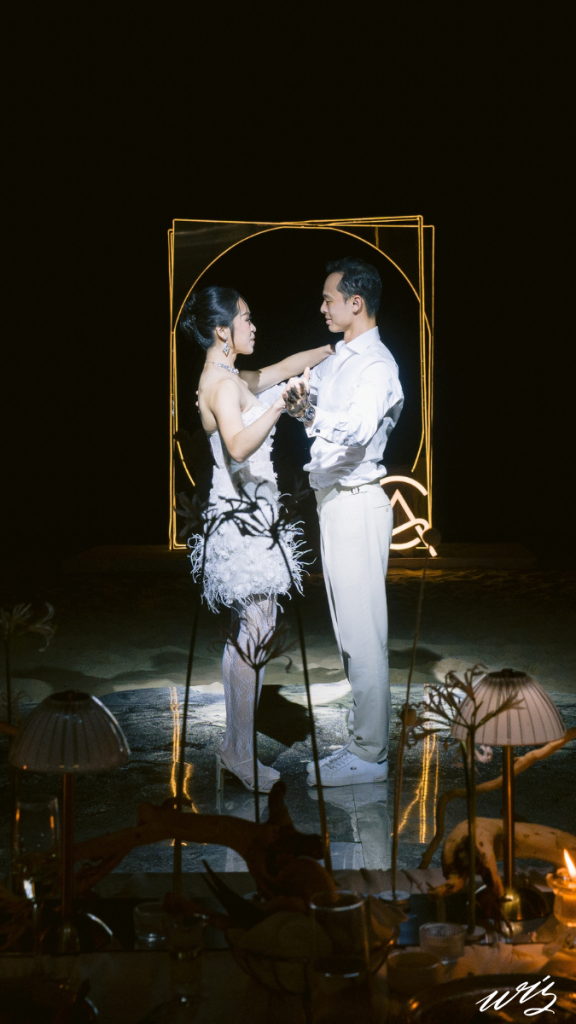
Wedding services WedinStyle offers in Vietnam
WedinStyle has been planning weddings across Vietnam since 2009, working nationwide from offices in Hanoi and Ho Chi Minh City. We plan in English and Vietnamese, and everything starts with a free first consultation.
- Destination wedding planning. Full planning for couples marrying somewhere special in Vietnam, from venue selection and budgeting to guest logistics and the wedding weekend itself.
- Elopement wedding. Packaged elopements in cities and destinations across the country, designed for two people and a handful of witnesses.
- Standard wedding planning. Detailed end to end planning for city weddings in Hanoi, Saigon and their surrounding areas.
- Premium wedding styling. Bespoke styling packages focused on aesthetics and atmosphere, for couples who arrive with a strong visual direction.
- Decoration. Design and installation for couples who already have a venue and a plan but want the look handled by specialists.
Tell us about you, about your love story, and we will show you how we can help.
Frequently asked questions
Is Vietnam a good destination wedding location?
Yes. It combines a wide range of landscapes, strong resort infrastructure, well connected airports and costs meaningfully lower than comparable destinations in Europe, Australia or the Caribbean, which lets couples invest more in design and guest experience.
Which part of Vietnam is best for a beach wedding?
Phu Quoc for luxury resort weddings and sunset ceremonies, Da Nang and Hoi An for beach plus heritage in one trip, and Nha Trang for island resorts. Quy Nhon suits quiet coastline, while Phan Thiet offers dramatic dunes within driving distance of Ho Chi Minh City.
Which part of Vietnam is best for a mountain wedding?
Sa Pa for high, misty terraces and dramatic cloud, and Ninh Binh for limestone karsts with easy access from Hanoi. Mai Chau and Hoa Binh give you gentle green valleys, and Da Lat delivers cool highland gardens and pine forest.
How far in advance should I book a venue in Vietnam?
Twelve to eighteen months ahead for large weddings at popular resorts, especially in peak dry season. Six to nine months is usually workable for mid size celebrations, and elopements can often be arranged in two to three months.
Do foreigners need a permit to marry in Vietnam?
No special permit is needed to hold a ceremony, although some public sites such as beaches, parks and heritage locations require a location permit arranged in advance. Registering a marriage legally is a separate process handled by the provincial Department of Justice, and it requires documents such as a certificate of no impediment to marriage from your home country, legalised and translated.
Because requirements vary by nationality and province, many international couples register legally at home and hold a symbolic ceremony here. Confirm current rules with your embassy, and ask your planner to coordinate the paperwork with you.


